BMW vehicles are known for their handling, comfort and performance, but that also means tyre condition matters more than many drivers realise.
Your tyres affect how the car accelerates, brakes, corners and feels on the road. In Dubai, heat, long-distance driving and road conditions can also contribute to faster tyre wear if they are not checked regularly.
If you drive a BMW, proper tyre care can help improve safety, maintain driving comfort and reduce the chance of replacing tyres earlier than necessary.
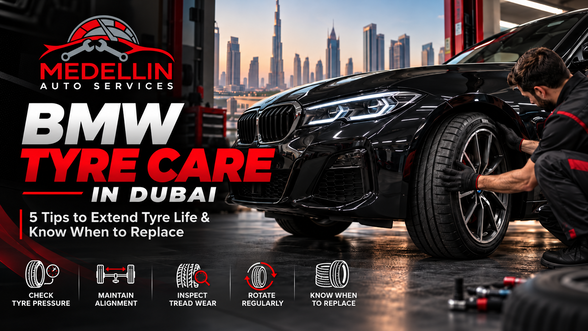
Here are five practical BMW tyre care and replacement tips every owner should know.
1. Keep Your BMW Tyre Pressure Correct
Correct tyre pressure is one of the simplest ways to protect your tyres.
If the pressure is too low, the tyre can generate more heat and wear faster along the edges. If the pressure is too high, the centre of the tread may wear more quickly and the ride may feel harder.
BMW models may also have different recommended pressures depending on:
- Vehicle model
- Tyre size
- Passenger load
- Front and rear axle setup
- Whether the vehicle uses run-flat tyres
The correct pressure is usually listed on the vehicle information label or in the owner’s manual.
Why this matters in Dubai
Tyre pressure can change with temperature, and Dubai’s heat makes regular checks even more important.
Do not rely only on the tyre pressure warning light. A tyre may still be slightly underinflated before the system alerts you.
A good habit is to check tyre pressure regularly when the tyres are cold.
2. Check Wheel Alignment if Your BMW Pulls or Wears Tyres Unevenly
BMW suspension and steering systems are designed to give precise handling.
When the wheel alignment is incorrect, you may notice:
- The car pulling to one side
- Steering wheel sitting off-centre
- Uneven tyre wear
- Inner or outer tyre edges wearing quickly
- Reduced stability at higher speeds
Even a small alignment problem can shorten tyre life.
This is especially important on BMW models with wider tyres, sport suspension or staggered wheel setups.
If you notice uneven wear, do not simply replace the tyres without checking the alignment first. Otherwise, the new tyres may begin wearing in the same pattern.
3. Inspect Tyre Tread and Sidewalls Regularly
You should not wait until a tyre looks completely worn before checking it.
Take a few minutes to inspect:
- Tread depth
- Uneven wear
- Cracks
- Cuts
- Bulges
- Sidewall damage
- Embedded objects
- Signs of ageing
Pay particular attention to the inner edges of the tyres.
On some BMW models, the inner tread can wear faster and may be difficult to see without turning the steering wheel or inspecting the car from underneath.
Uneven wear can indicate another problem.
Tyre wear is not always caused by the tyre itself.
It may also point to issues with:
- Wheel alignment
- Suspension components
- Tyre pressure
- Wheel balance
- Shock absorbers
If one tyre is wearing much faster than the others, it is worth having the vehicle inspected.
4. Rotate BMW Tyres Only When the Setup Allows It
Tyre rotation can help even out wear, but not every BMW can have its tyres rotated in the traditional way.
Some BMW vehicles use a staggered tyre setup, meaning the rear tyres are wider than the front tyres.
In that situation, front-to-rear rotation may not be possible.
Directional tyres can also limit how tyres can be moved around the vehicle.
Before rotating BMW tyres, make sure the tyre sizes and tread direction allow it.
If your BMW uses the same tyre size on all four wheels, regular rotation may help extend tyre life by distributing wear more evenly.
A professional technician can advise whether rotation is appropriate for your particular BMW.
5. Know When Your BMW Tyres Need Replacement
Tyres should be replaced when they are worn, damaged or no longer safe for continued use.
Signs that replacement may be needed include:
- Low tread depth
- Visible tread wear indicators
- Cracks in the rubber
- Sidewall bulges
- Repeated punctures
- Vibration despite balancing
- Significant uneven wear
- Damage from impact
- Age-related deterioration
Do not judge a tyre only by how much tread appears to remain.
A tyre can still have tread but become unsafe because of cracking, structural damage or ageing.
If you are unsure, have the tyres professionally inspected.
What About BMW Run-Flat Tyres?
Many BMW models are equipped with run-flat tyres.
These tyres are designed to allow limited driving after a loss of pressure, giving you time to reach a safe location or workshop.
However, run-flat does not mean the tyre can be driven indefinitely after a puncture.
Driving distance and speed limitations depend on the tyre manufacturer and condition of the tyre.
If your BMW shows a tyre pressure warning, reduce speed, check the tyre and arrange an inspection as soon as possible.
In some cases, a damaged run-flat tyre may need replacement rather than repair.
Why Are BMW Rear Tyres Wearing Faster Than the Front?
This is common on some BMW models.
Rear-wheel-drive performance, wider rear tyres, suspension geometry and driving style can all contribute to faster rear tyre wear.
Sportier BMW models may naturally wear rear tyres faster, particularly if driven aggressively.
However, very rapid or uneven wear should still be checked because alignment or suspension issues may also be involved.
How Often Should You Check BMW Tyres?
There is no need to wait for a scheduled service.
A simple visual inspection every few weeks can help you notice problems early.
It is also a good idea to check the tyres before:
- Long journeys
- Summer driving
- Highway trips
- Heavy vehicle loads
- Extended periods of driving
Tyre pressure should also be checked regularly.
Can Bad Suspension Damage BMW Tyres?
Yes.
Worn suspension components can change how the tyre contacts the road and lead to uneven wear.
Problems with control arms, bushings, shock absorbers or other suspension parts can affect both handling and tyre life.
If your BMW feels unstable, makes knocking noises or is wearing tyres unevenly, the suspension should be inspected.
BMW Tyre Care and Vehicle Inspection in Dubai
BMW tyre care is not only about replacing worn tyres.
Proper pressure, alignment, suspension condition and regular inspections all work together to help your tyres last longer and keep the vehicle driving as it should.
If you notice uneven tyre wear, vibration, steering issues or unusual handling, it is better to have the vehicle inspected before fitting a new set of tyres.
At Medellin Auto Services, our team can inspect your BMW’s tyre condition, wheel alignment, suspension and related components to help identify the cause of abnormal wear.
Need Help With Your BMW Tyres?
If your BMW tyres are wearing unevenly, losing pressure or showing signs of damage, our team can inspect the vehicle and help determine whether alignment, suspension or replacement is required.
Contact Medellin Auto Services
Call / WhatsApp: +971 50 904 9270
Website: https://medellinautoservices.ae/
Location: Dubai, UAE
Book your BMW inspection today and help protect your tyres, handling and overall driving performance.