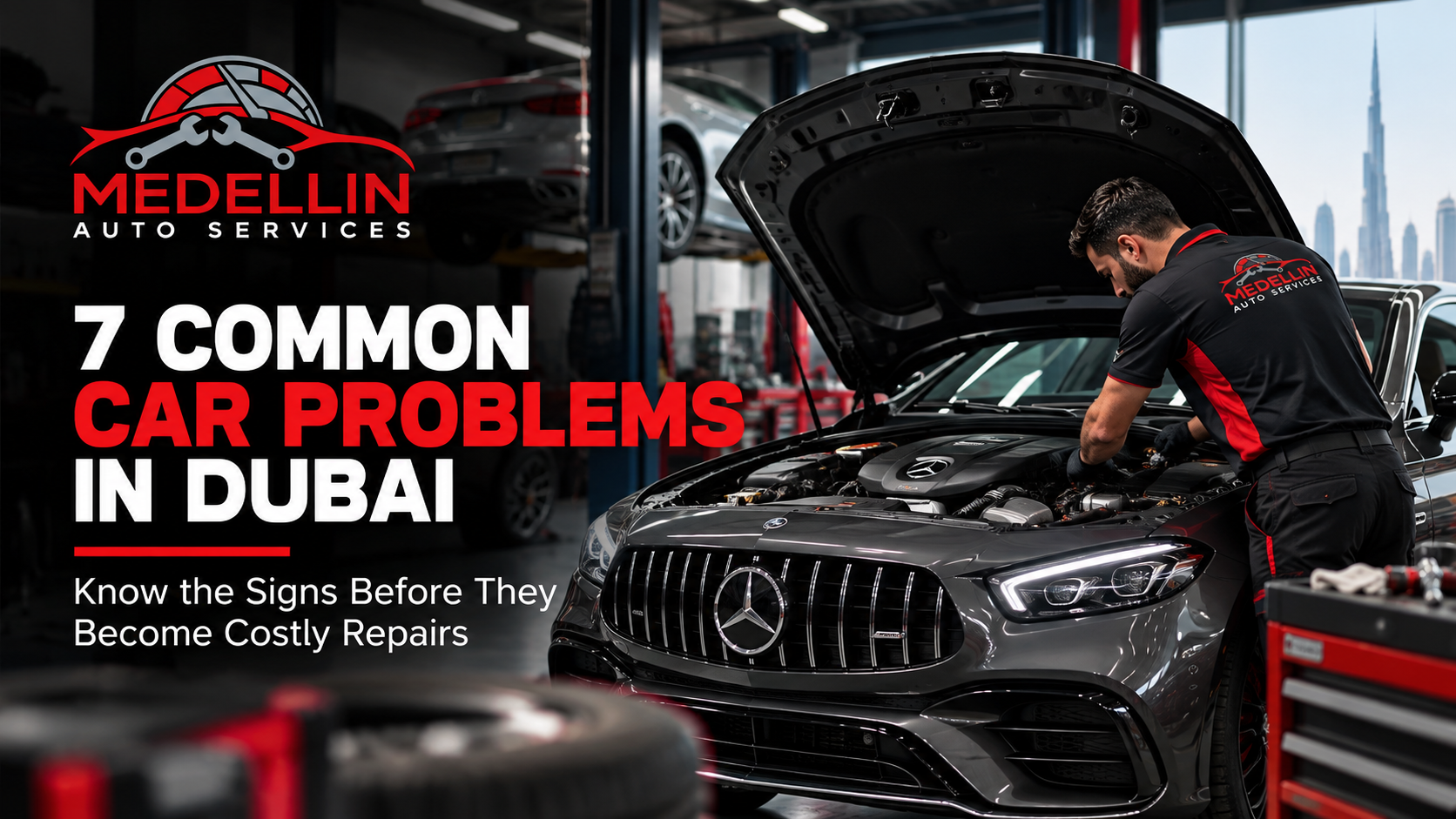
Driving in Dubai can be demanding on your vehicle. High temperatures, heavy traffic, long-distance driving and everyday stop-and-go conditions can put additional pressure on your car’s engine, air-conditioning system, brakes, battery and other components.
Some vehicle problems start with small warning signs but can become expensive repairs when ignored. Knowing what to look for can help you take action early and keep your car performing reliably.
Here are seven common car problems drivers in Dubai should watch for.
A properly functioning air-conditioning system is essential for comfortable driving, especially during hotter months.
If your AC takes too long to cool the cabin, blows warm air or produces weak airflow, there may be an issue with the refrigerant level, compressor, condenser, cooling fan or another AC component.
Common warning signs include:
- Warm air coming from the vents
- Weak airflow
- Unusual noise when the AC is running
- Bad smell from the vents
- AC cooling intermittently
- Water leaking inside the vehicle
Ignoring AC problems can sometimes cause additional strain on other components.
If you notice a drop in AC performance, having the system professionally inspected can help identify the cause before the problem becomes more serious.
Engine overheating is one of the vehicle problems drivers should never ignore.
Your car’s cooling system works continuously to keep the engine within its correct operating temperature. Problems with the radiator, coolant, thermostat, water pump, hoses or cooling fan can cause temperatures to rise quickly.
Signs of an overheating problem may include:
- Temperature gauge moving into the red zone
- Steam coming from the engine bay
- Coolant warning light
- Sweet smell around the vehicle
- Coolant leaking underneath the car
- Reduced engine performance
Continuing to drive an overheating vehicle can potentially lead to serious engine damage.
If the temperature warning appears, it is better to stop safely and arrange an inspection rather than continuing to drive.
Extreme temperatures can affect battery performance and shorten battery life.
A weak battery may not always fail immediately. In many cases, drivers notice smaller electrical issues before the battery completely stops working.
Warning signs can include:
- Slow engine starting
- Clicking sound when starting the car
- Dim headlights
- Dashboard warning lights
- Electrical accessories behaving unusually
- Car not starting
However, not every electrical issue is caused by the battery.
Problems with the alternator, starter motor, wiring, sensors or other electrical components can cause similar symptoms.
Professional diagnostics can help identify the actual source of the problem instead of replacing parts unnecessarily.
Your braking system is one of the most important safety systems in your vehicle.
Brake pads, discs and other braking components naturally wear over time and should be inspected regularly.
You should have your brakes checked if you notice:
- Squeaking or grinding sounds
- Steering wheel vibration when braking
- Brake pedal feeling soft
- Car pulling to one side
- Longer stopping distance
- Brake warning light
Grinding noises can sometimes indicate that brake pads have worn significantly.
Addressing brake issues early can help prevent damage to additional braking components and maintain safe stopping performance.
Dubai roads are generally well maintained, but speed bumps, uneven road surfaces, frequent driving and normal component wear can gradually affect suspension and steering parts.
Common symptoms include:
- Vehicle pulling to one side
- Uneven tyre wear
- Knocking noises when driving over bumps
- Excessive bouncing
- Steering wheel vibration
- Car feeling unstable at higher speeds
Suspension problems can affect comfort, handling and tyre life.
A professional inspection can determine whether components such as shock absorbers, control arms, bushings, tie rods or other suspension parts need attention.
The check engine light can appear for many different reasons.
Sometimes the issue may be relatively minor, while other situations can indicate a problem that requires immediate attention.
Possible causes include issues involving:
- Engine sensors
- Fuel system
- Ignition system
- Emissions system
- Air intake system
- Engine management components
Instead of guessing which component is causing the warning, technicians can connect diagnostic equipment to the vehicle and read the relevant fault codes.
If the check engine light is flashing rather than remaining continuously illuminated, the vehicle should generally be inspected as soon as possible.
Your transmission transfers power from the engine to the wheels and plays an important role in smooth vehicle operation.
Transmission problems can gradually become more noticeable over time.
Watch for symptoms such as:
- Delayed gear changes
- Jerking while shifting
- Gear slipping
- Unusual noises
- Transmission warning light
- Burning smell
- Fluid leaking underneath the vehicle
Modern automatic and dual-clutch transmissions are complex systems.
Early diagnosis can sometimes prevent a small issue from becoming a much larger gearbox repair.
When Should You Visit a Car Garage?
You do not necessarily need to wait for a warning light or breakdown before having your vehicle inspected.
Consider booking an inspection if you notice any unusual change in how your vehicle:
- Sounds
- Starts
- Drives
- Steers
- Brakes
- Changes gear
- Cools the cabin
Even small changes can sometimes indicate developing mechanical or electrical problems.
Regular maintenance also helps technicians identify wear before it becomes an unexpected repair.
Preventive Maintenance Can Save You From Bigger Repairs
Preventive maintenance remains one of the easiest ways to reduce the risk of unexpected vehicle problems.
Depending on your vehicle, regular maintenance may include:
- Engine oil and filter replacement
- Brake inspection
- Coolant inspection
- Battery testing
- AC system inspection
- Tyre and suspension checks
- Fluid level inspection
- Computer diagnostics
Always follow the maintenance recommendations provided for your particular vehicle model and driving conditions.
Professional Car Repair and Maintenance at Medellin Auto Services
If your vehicle is showing any of these warning signs, Medellin Auto Services provides professional diagnostics, maintenance and repair services for a wide range of vehicles.
From car AC repair and electrical diagnostics to engine, transmission, brakes, suspension and general vehicle maintenance, our technicians can inspect the problem and recommend the appropriate repair.
Early diagnosis can help protect your vehicle, reduce the possibility of unexpected breakdowns and keep your car performing at its best.
Contact Medellin Auto Services to schedule your vehicle inspection or service.